
Quick Summary
A roof leak requires prompt action to limit water damage and protect your home. Shut off power near affected electrical areas, contain the water, document visible damage, and avoid unsafe roof access. If it is safe, check the attic for clues and contact a roofing professional to assess and repair the source.
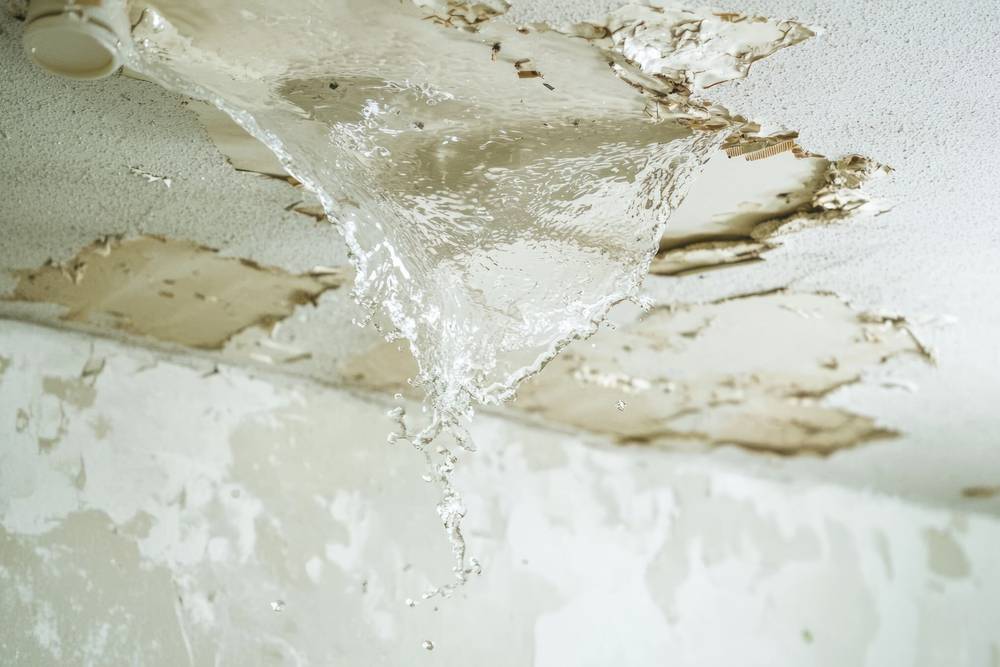
A roof leak repair situation often starts small: a faint yellow-brown ring on the ceiling, a musty smell in a closet, or a small drip that seems to come and go with the rain. These early signs deserve immediate attention rather than a wait-and-see approach, because water rarely stays contained to the spot where it first appears.
Step One: Protect People and Electronics First
If water is dripping near an outlet, switch, or light fixture, treat that area as an electrical hazard. Shut off power to the affected circuit at the breaker panel if it can be reached safely, and keep everyone clear of the area until the power is confirmed off. Move any electronics, rugs, and furniture away from the drip line as the very next step.
Step Two: Contain the Water
Place a bucket or large container directly under the leak, and if the ceiling is bulging from trapped water, carefully poke a small hole in the center of the bulge with a screwdriver to relieve the pressure in a controlled way.
This sounds counterintuitive, but it prevents a much larger and more sudden ceiling collapse and directs the water where it can be managed. Lay down towels or a tarp on the floor to absorb any overflow.
Step Three: Check the Attic If It Is Safe
If there is safe access to the attic, a quick look with a flashlight can help identify where water is entering. Follow the trail of moisture along rafters and decking, since water often travels along a beam before dripping down at a point farther from the actual entry hole. Sharing this information with the roofing team when they arrive can speed up the diagnosis significantly.
Step Four: Photograph the Damage
Before any cleanup begins, take clear photos and video of the ceiling stains, standing water, and any visible exterior damage from ground level. This documentation is valuable both for the repair estimate and for any insurance claim. According to the Insurance Information Institute, clear, timely documentation is one of the most helpful things a homeowner can provide when a claim is filed.
Step Five: Reach Out to a Trusted Roofing Team
Once the immediate situation is under control, contact us so a member of our team can assess the situation and get a repair scheduled. Coastal Elite Roofing has provided emergency roof repair across Statesboro and southeast Georgia for more than a decade, and we know that a fast, informed response makes all the difference in how much additional damage a home sustains.
We will ask a few quick questions about where the water is entering, how long the leak has been active, and whether any recent storms or fallen debris might be the cause. This helps us prepare the right materials before the crew even leaves the shop.
What Usually Causes Roof Leaks
Leaks typically trace back to a handful of common culprits: damaged or missing shingles, deteriorated flashing around chimneys and vents, clogged gutters that force water to back up under the roofline, cracked pipe boots, or aging roofing material that has simply reached the end of its service life.
According to the National Roofing Contractors Association, flashing failures and improper installation around roof penetrations are among the most frequently cited sources of leaks in residential roofing.
What Happens When Our Team Arrives
Once on site, we conduct a thorough visual inspection both from the ground and, when safe, directly on the roof, tracing the leak back to its actual source rather than just patching the spot where water appeared inside.
Depending on the extent of the damage, this might mean replacing a section of shingles, resealing flashing, or, in more serious cases, addressing damaged decking underneath.
We explain exactly what we find and what the repair will involve before any work begins, so there are no surprises.
Preventing the Next Leak
After the immediate repair is complete, it is worth scheduling a full roof repair inspection to check for other vulnerable spots that have not yet caused a visible leak. Routine maintenance, including gutter cleaning and prompt shingle repair, is one of the most effective ways to avoid another emergency call down the road.
Common Mistakes Homeowners Make During a Leak Emergency
In the rush to stop water from spreading, it is easy to make choices that create bigger problems later. Climbing onto a wet roof without proper footing or fall protection is one of the most dangerous mistakes, since roofing surfaces become significantly more slippery when saturated.
Another common misstep is applying a heavy sealant or patching compound over a shingle without understanding the underlying cause, which can trap moisture beneath the surface and mask a problem that continues to worsen out of sight.
Ignoring a slow leak because it seems to stop after the rain passes is another frequent error. Roofing leaks are rarely self-correcting, and a leak that appears intermittent is often just as active as a constant one, only concentrated during specific wind directions or rainfall intensities.
How Long Repairs Typically Take Once Diagnosed
Most straightforward leak repairs, such as replacing a section of shingles or resealing flashing around a vent, can be completed within a few hours once our crew is on site and has identified the source.
More involved repairs, particularly those requiring decking replacement, may take a full day or slightly longer depending on the extent of the damage and weather conditions during the repair window.
What to Expect After the Repair Is Finished
Once the repair is complete, we recommend keeping an eye on the previously affected area during the next several rain events to confirm the fix has fully resolved the issue.
Any lingering musty odor or new discoloration should be reported promptly, since it may indicate either a separate issue or moisture that has not yet fully dried within the wall or ceiling cavity.
We stand behind our repair work and are always available if any follow-up questions arise.
When a Leak Signals a Bigger Underlying Issue
Occasionally, what looks like a simple leak turns out to be a symptom of a larger problem, such as widespread flashing failure across the roof, significant age-related deterioration of the shingles, or ventilation issues that have caused condensation to build up in the attic over time.
When we find evidence of this during a repair visit, we explain it honestly rather than only patching the immediate symptom, since a piecemeal approach to a systemic issue tends to result in repeated service calls and higher costs over time.
How Attic Ventilation Connects to Leak Problems
Poor attic ventilation can sometimes be mistaken for a roofing leak, since trapped moisture from condensation can produce similar staining and dampness on ceilings and in insulation.
According to the U.S. Department of Energy, balanced attic ventilation helps regulate temperature and moisture levels, which protects both the roofing structure and the efficiency of the home.
Part of a thorough leak diagnosis includes ruling out ventilation issues so the actual cause is addressed rather than assuming every sign of moisture points to a hole in the roof.
Why Local Knowledge Speeds Up an Accurate Diagnosis
Roofing problems in southeast Georgia often follow patterns shaped by the region’s climate, from wind-driven rain during summer thunderstorms to the effects of prolonged humidity on aging materials.
Having served Statesboro and the surrounding area for more than a decade, our team has developed a strong sense of where leaks are likely to originate based on a home’s age, roofing material, and construction style, which allows us to move through the diagnostic process efficiently rather than guessing.
How Material Choice Affects Long-Term Leak Resistance
Not all roofing materials handle Georgia’s weather the same way. Standard asphalt shingles perform well for their expected lifespan but eventually become more vulnerable to leaks as granules wear away.
Metal roofing, backed by a 50-year warranty through our installations, sheds water quickly and resists the kind of granule loss that affects shingles, though attention to fastener points remains important. Clay tile, also carrying a 50-year warranty, holds up exceptionally well against sun and heat but requires careful handling to avoid cracks.
For homeowners dealing with recurring leaks on an aging roof, discussing material options during the repair visit can be a useful way to think about long-term prevention rather than just the immediate fix.
A leaking roof will not fix itself, and every hour that passes adds to the damage. Contact us at Coastal Elite Roofing and let our experienced team stop the problem at its source.
FAQs
Why does my roof only leak during heavy rain?
Small gaps in flashing or shingles often only allow water through under significant volume or wind-driven rain, which is why a leak can seem intermittent even though the underlying damage is constant.
Is it safe to go on my roof to look for the leak myself?
We strongly recommend against climbing onto a roof, especially a wet one, without proper safety equipment and training. It is safer to check the attic from below and let a professional handle the roof surface itself.
Can a small leak really cause serious damage?
Yes. Even a slow, steady drip can lead to rotted decking, damaged insulation, and mold growth over time, which is why prompt repair matters even when the leak seems minor.