
Quick Summary
After a storm rolls through Statesboro and the surrounding counties, the safest and most accurate way to check a roof for damage is often from the air. Drone technology lets trained roofers capture high-resolution images of every slope, valley, and vent without anyone climbing a ladder.
Severe weather in southeast Georgia rarely announces the full extent of what it leaves behind. A homeowner might notice a few shingles in the yard or a soft spot on the ceiling, but the real story is usually written across the roof deck itself, in places no one can see from a second-floor window. Hail damage roof issues are notorious for this. Hail can bruise a shingle’s mat, crack its surface, or knock loose the granules that shield it from UV rays, and none of that is visible unless someone gets close enough to look.
According to the National Weather Service, hail causes roughly one billion dollars in property and crop damage across the United States every year, and much of that damage to roofing is cosmetic at first glance but structurally significant over time. Waiting until a leak appears usually means the damage has already been progressing for months.
How Drone Technology Changes the Inspection Process
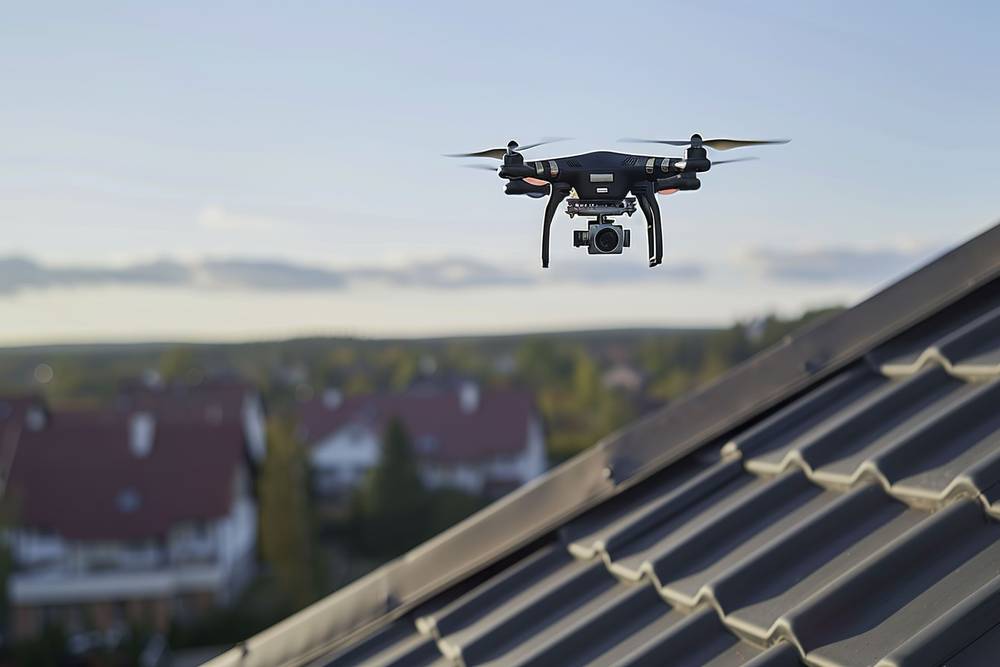
A drone equipped with a high-resolution camera can cover an entire roof system in minutes, capturing close-up images of ridges, valleys, flashing, and penetrations that would otherwise require multiple ladder placements and hours of careful footwork. At Coastal Elite Roofing, we use this technology to document every angle of a roof after a storm, building a complete visual record that we can review, zoom into, and share directly with homeowners and insurance adjusters.
The images captured by drone are timestamped and geotagged, which creates a reliable record of the roof’s condition immediately following a weather event. That record matters when a claim is filed weeks later and an adjuster wants to confirm that damage is storm-related rather than the result of ordinary wear.
The Safety Case for Drone Roof Inspections
Falls remain one of the leading causes of injury in the construction and home maintenance trades. The Occupational Safety and Health Administration reports that falls account for a large share of construction fatalities each year, many of them involving ladders or roof edges.
Drone inspections remove that risk almost entirely for the initial assessment. Instead of a technician walking a wet, storm-damaged roof, a trained pilot operates the drone from the ground, sending it over every plane of the structure while staying safely below.
This matters just as much for steep-slope residential roofs as it does for large commercial buildings, where a single flat roof might span tens of thousands of square feet.
A drone can survey a commercial rooftop far faster than a crew walking the surface, which reduces both labor time and the chance of an overlooked section.
What Drone Imagery Can Reveal
High-resolution aerial photography can pick up details that are easy to miss during a quick visual check, including cracked or missing shingle tabs, bruised or dimpled shingle mats consistent with hail impact, lifted or curling edges caused by wind uplift, exposed nail heads, damaged flashing around chimneys and vents, and debris accumulation in valleys or gutters that can trap moisture.
For metal, clay tile, and TPO roofing systems, drones can also capture subtle discoloration or panel movement that might indicate a failed seam or fastener. Because these materials are built to last for decades, catching a small issue early protects the long-term value of the investment.
How Coastal Elite Roofing Uses Drones on Every Storm Call
When a homeowner or business owner reaches out to us after severe weather, our team schedules a visit that combines drone imagery with an on-the-ground walkthrough. This gives us both the wide view from above and a close physical check of vulnerable areas like flashing, skylights, and roof-to-wall transitions. We have spent more than a decade serving Statesboro and southeast Georgia, and that experience shapes exactly where we look first depending on the type of storm, the roof’s age, and its material.
Our roof inspection services are offered completely free of charge, and there is never any pressure to move forward with repairs based on what we find. We simply provide an honest, documented assessment so the homeowner can make an informed decision.
Turning a Drone Inspection Into an Insurance Claim
Insurance companies rely on clear documentation to process storm damage claims fairly and quickly. According to the Insurance Information Institute, detailed photographic evidence is one of the most useful things a policyholder can provide when filing a claim, since it establishes both the extent of the damage and the timing of the event.
We provide our clients with a full report of drone and ground-level images that they can submit with their claim, and we are also glad to meet an adjuster on site to walk through the findings together. Because we work with insurance companies regularly, we understand the documentation standards they expect and we build our reports around them.
Commercial Roofs Benefit Just as Much
Business owners often assume that storm damage inspections are mainly a residential concern, but flat and low-slope commercial roofs are just as vulnerable to hail and wind, and often harder to access safely.
A drone survey lets us document an entire commercial roof system quickly, minimizing disruption to daily operations while still producing the thorough report needed for an insurance claim or a maintenance plan.
Why Timing Matters After a Storm
The window between a storm event and a roof inspection can affect both the outcome of a claim and the long-term condition of the roof. Water finds the smallest opening and does not wait for a convenient time to cause damage.
A prompt inspection, whether through a routine schedule or immediately following severe weather, gives homeowners the chance to catch problems before they turn into interior leaks, mold growth, or structural rot.
Insurance policies also often include specific timelines for reporting storm damage, and waiting too long to document a loss can complicate a claim even when the damage itself is clearly weather-related. Scheduling a drone inspection within days of a storm, rather than weeks, keeps that timeline working in the homeowner’s favor.
The Technology Behind an Accurate Aerial Survey
Modern inspection drones carry cameras capable of capturing far more detail than a smartphone photo taken from the ground. Combined with stabilization systems that keep the footage steady even in light wind, these tools allow our technicians to zoom into a single shingle tab or a section of flashing after the flight is complete, rather than relying on memory or a quick glance during a walkthrough.
Some flights also include overlapping images that can be stitched together into a complete map of the roof, giving homeowners and adjusters a single reference document instead of a scattered collection of photos.
This level of detail matters most on complex rooflines with multiple pitches, dormers, and valleys, where a ground-level view or even a single ladder placement would miss significant portions of the surface entirely.
Combining Drone Data With Manufacturer Standards
When our inspections identify damage on roofs using Atlas shingle products, we reference manufacturer guidelines to determine whether the damage falls within a range that affects the material’s performance or its lifetime warranty coverage.
This same approach applies to metal, clay tile, and TPO systems, each of which has its own tolerances for wind and impact damage. Matching what we see in the drone imagery against these standards helps us give homeowners an assessment grounded in documented criteria rather than a subjective guess.
If a recent storm has passed through your neighborhood, do not wait for a leak to tell you something is wrong. Book your free inspection with Coastal Elite Roofing and let our team put drone technology to work for you.
FAQs
How long does a drone roof inspection take?
Most residential drone inspections are completed in under thirty minutes, including the ground-level walkthrough. Larger commercial roofs may take longer depending on square footage and roof complexity.
Will a drone inspection damage my roof or landscaping?
No. Because the drone never lands on the roof and the pilot operates it from a safe distance, there is no physical contact with the structure, shingles, or surrounding property.
Can drone images really be used for an insurance claim?
Yes. Timestamped, high-resolution images are widely accepted by insurance adjusters as documentation of storm damage, and we are happy to provide a full report for your claim.
Do I need to be home for a drone inspection?
It helps for us to speak with you beforehand, but the drone survey itself can typically be completed from the exterior without requiring access to the interior of the home.
How often should I schedule a roof inspection even without storm damage?
We recommend at least one inspection per year in addition to any check following a significant weather event, so small issues can be caught before they become expensive repairs.