
Quick Summary
Wind damage roof repair starts with a close inspection after a major storm. High winds can lift shingles, strip away granules, curl edges, and expose the underlayment to rain. These problems may look minor from the ground, but water can travel far from the original entry point. Roofers inspect the damage, document their findings for insurance, and repair exposed areas before leaks spread. Fast action protects the roof deck, insulation, ceilings, and the rest of the structure. It can also make the claims process simpler.
Strong winds do more than blow a few shingles into the yard. Gusts create uplift that can pull shingles away from their fasteners, break their seals, and expose the layers underneath. Once that happens, rain has a way in.
That is why wind damage roof repair should not sit on a homeowner’s to-do list for weeks. A small opening today can become wet insulation, stained drywall, or damaged decking after the next hard rain. Homeowners dealing with storm damage should also know how to file a roof insurance claim and document the damage before repairs erase useful evidence.
At Coastal Elite Roofing, we handle storm damage restoration throughout Southeast Georgia. We offer free inspections and work directly with insurance providers during the claims process. As a local roofing contractor in Southeast Georgia, we bring years of experience with the storms and roofing problems common to this part of the state.
How Wind Damage Weakens the Roofing System
Wind attacks a roof from more than one direction. Uplift pulls roofing materials upward, while lateral force pushes across the surface. Asphalt shingles resist these forces through mechanical fasteners and sealant strips.
Once wind pressure exceeds what those connections can handle, shingles may loosen, tear, or break free. The damage can extend from the visible roofing material down to the underlayment, decking, ridge caps, and other parts of the roofing assembly.
Not every problem occurs during one dramatic storm, either.
Repeated high winds flex shingles again and again. Over time, that movement can weaken adhesive bonds and loosen fasteners. The roof may still appear intact from the driveway, yet water could already be finding its way underneath. A close inspection is often the only way to catch this type of damage before a ceiling stain reveals it.
Four Common Signs of Wind Damage
Wind damage is not always obvious. Missing shingles are easy to spot, but several less noticeable signs can point to the same problem after severe weather.
Missing granules: Asphalt shingles depend on their mineral granules to protect the surface. Strong wind can loosen this protective coating. You may find excess granules in gutters or downspouts, while bald patches begin to appear on the shingles themselves. These bare areas weather faster.
Curled shingle corners: A gust can catch the edge of a shingle and pull it upward. Once the corner curls, the seal between neighboring shingles may break. Rain can then work underneath the lifted edge.
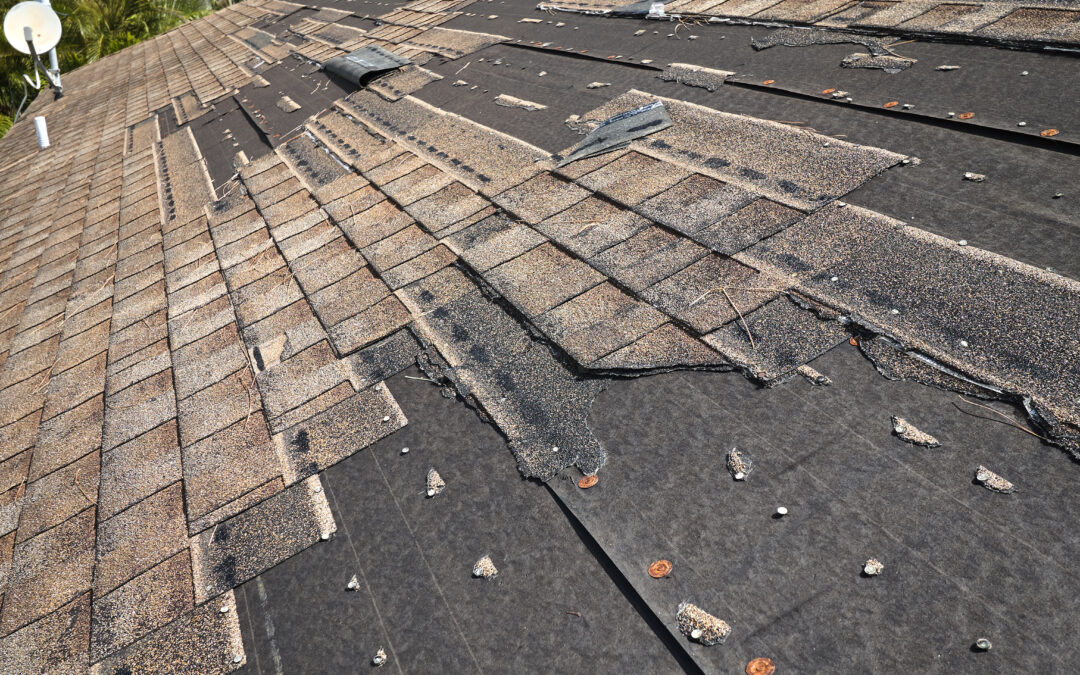
Exposed nail heads: When part of a shingle tears away, roofing nails may become exposed. Water can follow those fasteners directly toward the deck. Rust on the nail head is another warning sign. It suggests that moisture has been present for some time.
Debris impact marks: Branches and other windborne objects can puncture, crack, or fracture roofing materials. The damage does not need to look dramatic. A small split can become a persistent leak after repeated rain.
What Missing Shingles Reveal After Strong Winds
One missing shingle matters more than many homeowners realize. It leaves the underlayment exposed to direct sunlight, rain, and changing weather. That layer acts as backup protection, but it was never designed to serve as the finished roof surface for an extended period.
If the underlayment deteriorates, moisture can reach the wood deck below.
There is another concern. Wind rarely affects a single shingle in complete isolation. Shingles beside the missing section may have loose seals, bent tabs, or stressed fasteners even though they remain in place. Replacing the obvious missing piece without inspecting the surrounding area can leave part of the damage untreated.
How Lifted Shingles Turn Into Roof Leaks
A lifted shingle gives wind-driven rain a route beneath the roof covering. Once water gets underneath, gravity does not always send it straight downward. It can travel along the underside of shingles, decking, or framing before eventually dripping into the attic.
That explains a common roofing mystery: the stain on the ceiling may appear several feet away from the actual roof opening.
Shingles also depend on sealing strips that bond under heat. When wind breaks that bond, the shingle becomes easier to lift during the next storm. Reattaching or replacing the affected material restores the barrier before another round of rain gets underneath.
Roof Areas Most Vulnerable to High Winds
Roof edges and corners experience some of the greatest wind pressure because air becomes more turbulent as it moves around these transitions. Strong gusts can catch exposed shingle edges and gradually pull them away from their fasteners.
Ridge caps and hip shingles are similarly vulnerable. Their elevated and exposed positions place them directly in the path of fast-moving air, making them frequent areas of concern following severe weather.
Valleys, dormers, chimneys, and vents also warrant careful inspection. These features interrupt the continuous roof surface and can concentrate wind forces within relatively small areas. Flashing around roof penetrations can shift or loosen during sustained gusts, creating additional openings through which rainwater can enter.
When Wind Damage Needs Immediate Roof Repair
Not every type of storm damage requires emergency attention, and some issues can be addressed through a scheduled repair. Active leaks, however, require prompt action.
Large areas of missing shingles leave the underlying roofing system directly exposed to weather. Significant granule loss can indicate substantial deterioration of the shingle surface. Water stains, dripping ceilings, or damp attic materials indicate that moisture has already passed through the roofing barrier and entered the structure.
Loose flashing around chimneys and skylights also requires timely attention. Visible sagging in the roof deck should be treated with the same level of concern because it can indicate deterioration beneath the roofing materials. Sagging is not simply a cosmetic issue and may point to more extensive structural damage.
Once water begins entering the property, delaying repairs can allow the affected area to expand and make the eventual repair more extensive.
How Roofers Inspect Storm-Related Wind Damage
A professional roof inspection often begins from the ground. Roofers can use binoculars to identify missing shingles, displaced debris, damaged ridge caps, and other visible signs of storm damage before accessing the roof itself.
A closer inspection then examines the roofing system in greater detail. The contractor works across each roof slope, checking individual shingle tabs, sealant bonds, fasteners, flashing, and other potentially affected sections. The purpose is not simply to determine how many shingles are missing. It is also to identify roofing materials that have loosened or shifted but have not yet become detached.
Moisture meters can help identify hidden dampness beneath surface materials, while an attic inspection can provide additional evidence of water intrusion. Wet insulation, discoloration, and water marks beneath the decking may indicate a leak that is difficult to identify from the exterior alone.
How Professionals Repair Wind-Damaged Roof Sections
The repair process begins with limiting further exposure to weather. When shingles or other roofing materials are missing, roofers may place a heavy-duty tarp over the affected opening until permanent repairs can be completed. Although temporary, this measure can help prevent an isolated area of damage from allowing additional moisture into the interior.
Damaged shingles and compromised underlayment are then removed. Exposing the roof deck gives the contractor an opportunity to assess its condition and determine whether wet sections require time to dry. Decking that has become rotten or severely damaged may need to be replaced with plywood or oriented strand board.
Once the deck has been properly addressed, a new water-resistant underlayment is installed over the repaired area. Self-adhering membranes may also be used in vulnerable sections where additional moisture protection is appropriate for the roofing system.
How Insurance Handles Wind Damage Roof Claims
Standard homeowners insurance policies typically include wind damage among their covered perils, although the amount paid for a particular claim can vary considerably.
An insurance adjuster considers the cause of the damage, the extent of the affected area, and the repairs required to restore the roof. The age and existing condition of the roofing system can also influence the final settlement.
Thorough documentation can be important during this process. Photographs, inspection findings, repair estimates, and records of emergency work give the insurer a clearer understanding of the circumstances and extent of the damage. A roofing contractor can assist with the inspection and necessary paperwork as the claim progresses.
Homeowners should also review their deductible and coverage limits early in the process. These figures determine how much of the final repair cost may need to be paid out of pocket.
Call Coastal Elite Roofing for Trusted Wind Damage Repair
Storm damage can leave a property owner wondering what needs fixing first and what insurance will actually cover. Coastal Elite Roofing has served Southeast Georgia for more than ten years, offering free inspections and working directly with insurance companies.
Schedule a roof inspection in Statesboro GA and let our team assess the damage before another storm makes it worse.
For urgent problems, ask us about storm damage roof repair available around the clock. Coastal Elite Roofing brings award-winning workmanship to each project, from documenting the claim and preparing an estimate to completing the final repair.
FAQs
Can Wind Damage Occur Without Missing Shingles?
Yes. A shingle can remain on the roof even after wind breaks its seal. From the ground, everything may appear normal. Underneath, however, the lifted edge can give rain a path into the roofing system. A professional inspection can identify loose tabs and failed seals that are easy to miss during a quick visual check.
Does Homeowners Insurance Cover Wind-Damaged Roofs?
Most standard homeowners policies cover wind damage as a named peril. The actual amount paid depends on the language of the policy, the roof’s age, its condition, applicable limits, and the deductible. Reviewing those details before filing a claim helps avoid surprises once the adjuster begins calculating the settlement.
How Soon Should I Inspect After a Storm?
Inspect the roof as soon as weather conditions make it safe to do so. The sooner damage is found, the sooner exposed areas can be protected from another rainstorm. Waiting can allow a small opening to turn into damaged decking, insulation, or ceilings. Delays may also affect certain insurance coverage provisions.