Quick Summary
Most low-slope commercial buildings in Statesboro are covered with one of three systems: TPO single-ply membrane, metal panels or a cap and base modified bitumen roof. TPO is often chosen for its reflective surface on flat roofs, metal for its long service life and wind resistance, and cap and base for its toughness under foot traffic. What decides the right system is how your building is used, its roof slope and deck, and how long you plan to own it. Cost and lifespan vary with size, tear-off, insulation and maintenance.
A commercial roof protects everything under it: inventory, equipment, tenants, customers and the hours your doors stay open. Choosing the right commercial roofing services starts with understanding the systems that hold up well in Southeast Georgia, what drives their cost and how long each one can be expected to last.
Coastal Elite Roofing is locally owned and operated in Statesboro, and we install and repair commercial roofs for businesses across Bulloch County, Chatham County and the Coastal Empire. If you are planning a new roof or a replacement, start with a free roof inspection and estimate. You get a clear look at your current roof before you commit to anything.
Why Commercial Roofing Services Matter In Southeast Georgia
Commercial roofs here work harder than they would in a milder climate. Long summers push roof surface temperatures high, and that heat ages membranes, sealants and coatings. Humidity keeps moisture in the air most of the year, which makes good drainage and ventilation even more important. Near the coast, salt air speeds up corrosion on metal edges, fasteners and rooftop equipment.
Then there are the storms. Hurricanes, tropical storms and strong summer thunderstorms bring wind that pulls at roof edges and heavy rain that tests every seam and drain. A flat roof that drains poorly can hold water for days after a storm, and standing water finds weak spots.
For a business, a roof leak is more than a repair bill. It can mean damaged stock, closed sections of a store, unhappy tenants or a pause in production. That is why system choice, installation quality and regular inspections matter so much for commercial properties in our area.
Types Of Commercial Roofing Systems We Install
There are many types of commercial roofing on the market. For most Statesboro businesses, the choice comes down to three systems that we install:
- TPO single-ply membrane, using Mulehide TPO, for flat and low-slope roofs
- Metal roofing, using Worthouse metal, for sloped commercial roofs and buildings that need long service life
- Cap and base modified bitumen, a multi-layer system for flat roofs that see foot traffic or need extra puncture resistance
Each system has strengths and trade-offs. The sections below explain where each one fits. If you want to compare a wider range of options, including systems we see less often in this area, read our overview of commercial roofing systems compared.
TPO Roofing For Low-Slope Buildings
TPO, short for thermoplastic polyolefin, is a single-ply membrane rolled out in wide sheets over insulation. The seams between sheets are heat-welded, which fuses the material into one continuous surface. Most TPO roofs are white, and that light surface reflects a large share of the sun’s heat instead of absorbing it.
That makes TPO a strong fit for flat warehouses, retail buildings, offices and churches across Southeast Georgia. A cooler roof surface can reduce the load on air conditioning in summer, and a lighter membrane is easier on the structure than heavier systems.
TPO does have limits. The membrane is tougher than it looks, but sharp debris, dropped tools and heavy foot traffic can puncture it. On roofs with a lot of rooftop equipment, walkway pads are a smart addition. Detailing around drains, curbs and edges also matters, since that is where single-ply roofs most often fail when the work is rushed.
We install Mulehide TPO systems on commercial buildings in our area. For a deeper look at how TPO works, read our guide to TPO roofing for commercial buildings.
Metal Roofing For Commercial Properties
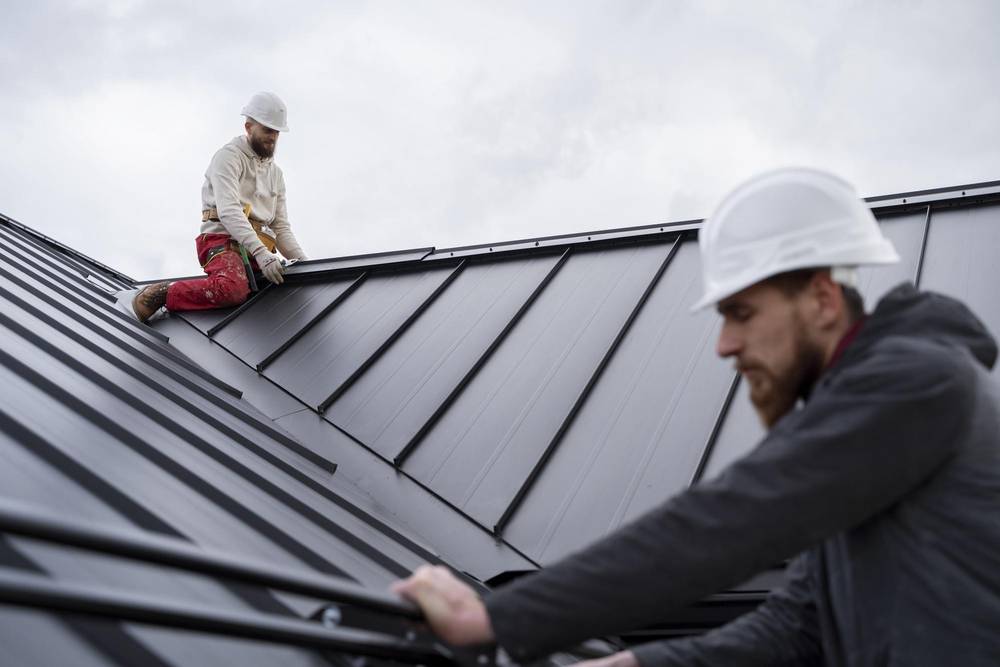
Metal roofing is a common choice for commercial buildings with some slope, such as shops, agricultural buildings, offices and mixed-use properties. Standing seam panels run from the ridge to the eave with raised seams that hide the fasteners, while exposed-fastener panels are simpler and often used on utility buildings.
Metal handles wind well when it is installed with the right clips, fasteners and edge details. It sheds rain quickly, resists fire and does not break down in heat the way some membranes can. Near the coast, the details matter more. Panel coatings, fastener type and flashing materials should be chosen for salt air, and cut edges need care during installation.
We install Worthouse metal roofing. Our customers notice the communication on metal jobs too. Wesley, who hired us for a standing seam metal roof, said in a 5-star review that our team was “highly communicative and very competitive with their pricing.”
Cap And Base Modified Bitumen Systems
Cap and base is a modified bitumen system built in layers. A base sheet goes down first, then a cap sheet on top. The cap sheet usually has a granule surface that protects the asphalt from the sun. Because it has more than one ply, the system has built-in redundancy: if the top layer is damaged, there is still a layer underneath.
That layered build makes cap and base a good fit for roofs that see regular foot traffic, such as buildings with rooftop HVAC units that technicians visit often. It also stands up well to dropped tools and hail compared with thinner membranes.
The trade-offs are weight and installation time. The system is heavier than single-ply, and the installation takes more steps. The darker granule surface also absorbs more heat than white TPO unless a reflective cap sheet or coating is used.
Comparing TPO, Metal And Cap And Base Roofs
Comparing the three side by side makes the decision clearer:
- Roof slope: TPO and cap and base are built for flat and low-slope roofs, while metal needs enough slope to shed water
- Heat: white TPO reflects the most sun of the three; metal and cap and base can be specified with reflective finishes
- Foot traffic: cap and base handles regular traffic best, metal handles occasional service visits, and TPO benefits from walkway pads
- Weight: TPO and metal are lighter, while cap and base adds more weight to the structure
- Storm exposure: all three can perform well in wind when edges and fasteners are installed to the manufacturer’s specifications
If two systems both fit your building, the tie-breaker is usually how long you plan to own it and how much rooftop activity it sees.
What Drives Commercial Roofing Costs?
Commercial roof pricing is project by project. Two buildings of the same size can have very different costs, so a real number only comes from an on-site inspection and a written estimate. These are the factors that move the price most.
Roof Size And Shape
Commercial roofs are priced by area, so size matters most. Shape matters too. A simple rectangle goes faster than a roof with several levels, parapet walls, valleys and corners that need custom flashing.
Materials
TPO, metal and cap and base each have different material costs and labor needs. The thickness of the membrane, the gauge and coating of metal panels, and the type of insulation underneath all change the price.
Tear-Off Versus Recover
Removing an old roof down to the deck costs more than installing a new system over it. Whether a recover is possible depends on how many layers are already there, whether the insulation is wet and what local code allows. A moisture survey or core sample helps answer that question.
Insulation Repairs
Wet insulation and rotted or rusted decking must be replaced before a new roof goes on. These repairs are often hidden until the old roof is opened, which is why a careful inspection beforehand helps avoid surprises.
Drains and Equipment
Every HVAC curb, vent, pipe, skylight and drain needs its own flashing detail. Roofs with a lot of rooftop equipment take more labor. Improving drainage, such as adding tapered insulation to stop ponding, also adds to the cost but can extend the roof’s life.
Access And Scheduling
Tight sites, tall buildings and businesses that must stay open during the work can affect staging, crew size and schedule. We plan the work around your operations to limit disruption.
When you compare estimates, compare the full scope, not only the bottom line. Ask what system and thickness is included, whether insulation is being replaced, how drains and edges will be detailed and what warranty comes with the work.
How Long A Commercial Roof Lasts In Our Climate
Lifespan depends on the material, the quality of the installation, drainage, maintenance and the weather the roof faces. Results vary from building to building.
Within any system, a well-drained roof that is inspected and maintained tends to stay in service longer. A roof that holds water, takes heavy foot traffic without walkway protection or goes years without repairs is more likely to need replacement early. Heat, humidity and storms in Southeast Georgia make maintenance even more important.
Simple habits help a commercial roof last:
- Schedule a professional inspection at least once a year and after major storms
- Keep drains, scuppers and gutters clear of leaves and debris
- Limit roof traffic to people who need to be there, and use walkway pads near equipment
- Repair small punctures, open seams and loose flashing quickly
- Keep records of every inspection, repair and warranty document
At the end of a commercial installation, you receive a written warranty covering our workmanship as well as the materials used. Keep it with your property records, since many warranties expect regular maintenance.
Questions To Ask A Commercial Roofing Contractor
The right contractor matters as much as the right system. Before you sign, ask:
- Which system do you recommend for this building, and why that one over the others?
- Will you remove the old roof or install over it, and how did you decide?
- How will drains, edges, curbs and penetrations be detailed?
- What does the written warranty cover, and what maintenance does it expect from me?
- How will you protect the building and keep the business running during the work?
Clear, specific answers are a good sign. Vague ones are a reason to keep asking.
How To Plan For A New Commercial Roof
A new commercial roof is a large investment, so it pays to plan it step by step.
- Start with an inspection. Find out the condition of the current roof, the deck and the insulation, and whether a repair could buy more time.
- Talk through how you use the building. Foot traffic, rooftop equipment, energy costs and how long you plan to own the property all point toward one system or another.
- Get a written estimate with a clear scope. It should name the system, the materials, the insulation and how drains, edges and penetrations will be handled.
- Plan the timing. Where you can, schedule replacement work ahead of the peak of hurricane season so the new roof is in place before the worst weather.
- Set up maintenance from day one. Put yearly inspections on the calendar so small problems are caught early.
FAQs
Which commercial roof is best for a flat building in Statesboro?
It depends on how the roof is used, so start by noting who walks on it and how much equipment sits on it. TPO suits roofs where reflectivity and lighter weight matter, while cap and base suits roofs with regular foot traffic near equipment. Ask your roofer to walk the roof with you and explain which conditions on your building push the choice one way.
Can a new commercial roof be installed over the old one?
Sometimes. It depends on how many roof layers already exist, whether the existing insulation is dry and what the building code and the new system’s manufacturer allow. To see what is under the surface, ask for core cuts or a moisture survey. If the old roof is wet, a full tear-off is usually needed so the new system starts on a sound base.
Will roof work disrupt my business?
Some activity is unavoidable, but a good plan keeps disruption low. Ask for a schedule that shows which sections will be worked on each day, where materials will be staged and how entrances will stay safe. Crews can often work in phases so that only part of the building is affected at a time, and noisy tasks can be planned around your busiest hours.
Contact us at Coastal Elite Roofing to book your free roof inspection and estimate.